Begin with a relationship
Before choosing a destination, describe the picture in ordinary language. Perhaps you want a bright ridge above a dark valley, an isolated peak behind a modest foreground, or repeated layers softened by distance. This small statement helps separate useful viewpoints from impressive places that do not suit the photograph. A lower path may reveal the shape of a mountain more clearly than its summit.
Study contour lines and the direction your camera will face. Look for intervening ridges, possible foregrounds and a horizon that could block low sunlight. Satellite imagery can suggest broad landforms, but it cannot confirm the condition of a trail, a safe river crossing or permission to stand somewhere. Keep the photographic plan separate from the navigation plan, then make sure both remain realistic.
Match the place to actual conditions
At Seceda in the Dolomites, the attraction is the relationship between sharp ridgelines and surrounding slopes. Cloud can simplify that structure or hide it entirely. Lift operations, seasonal snow and local trail restrictions affect whether a visit is practical. Check current operator and land-manager information, keep away from exposed edges and do not walk into meadow vegetation to remove people from the frame.
At Tre Cime di Lavaredo, a wide lens can make the famous towers surprisingly small. Consider a more distant view with fewer foreground distractions. Access roads and walking routes have seasonal constraints; exposed ground can remain wintry beyond the valley season. Stay on established routes and avoid treating a crowded trail as a private outdoor studio.
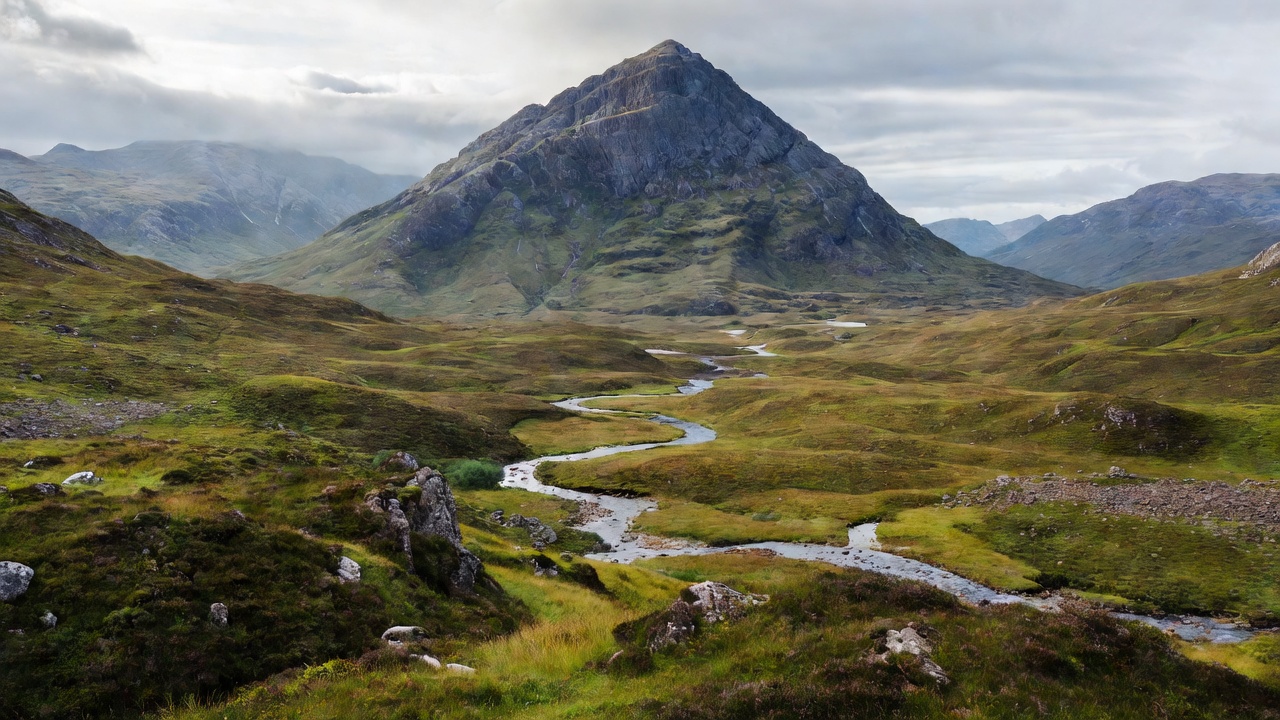
In Glencoe, the Buachaille Etive Mòr area offers strong triangular forms, changing cloud and water-led compositions. Heavy rain can turn an attractive foreground stream into a hazard. Use appropriate parking, never stop unsafely along the road and resist crossing saturated ground simply to reach a familiar composition. Scottish access rights carry responsibilities, including respect for land management and other visitors.
Read beyond the famous photograph
At Moraine Lake in Banff National Park, mountain reflections are only one possible story. Wind may replace a mirror surface with texture, and cloud may bring more interest to the shoreline than the peaks. Personal vehicle access to Moraine Lake Road is restricted; consult Parks Canada for current transport options, reservations, wildlife information and closures. Never assume an older travel article describes today’s arrangements.
In Eryri National Park, Llyn Idwal offers the scale of a mountain amphitheatre without requiring a summit photograph. Low cloud can isolate rock shapes, while a still interval can reveal partial reflections. The surrounding terrain remains mountainous: check forecasts, wear suitable footwear and stay on managed paths. Do not step across protected vegetation for a cleaner lake edge.
Around Aoraki / Mount Cook National Park, the scale of the Southern Alps rewards restrained foreground choices. Conditions can change quickly, and strong wind can make exposed sections unsuitable for a photography stop. Check New Zealand’s Department of Conservation for current track alerts. Bridges, marked boundaries and closure signs are not compositional obstacles to work around.
Make access part of the photograph
Write down the practical details before the creative ones become urgent: permitted access, parking or transport, daylight, turnaround time, route difficulty and a lower-risk alternative. Tell someone your plan when appropriate. Carry navigation, clothing, food and light suitable for the conditions; a phone with an attractive map is not a complete mountain safety system.
At the viewpoint, keep paths clear, give wildlife space and use durable surfaces. If the only way to improve a frame is to trespass, disturb an animal or damage a plant community, choose another frame. Be cautious with location sharing when a small site cannot absorb extra footfall. Describe access responsibilities as clearly as you describe the view.