Separate sunrise from first useful light
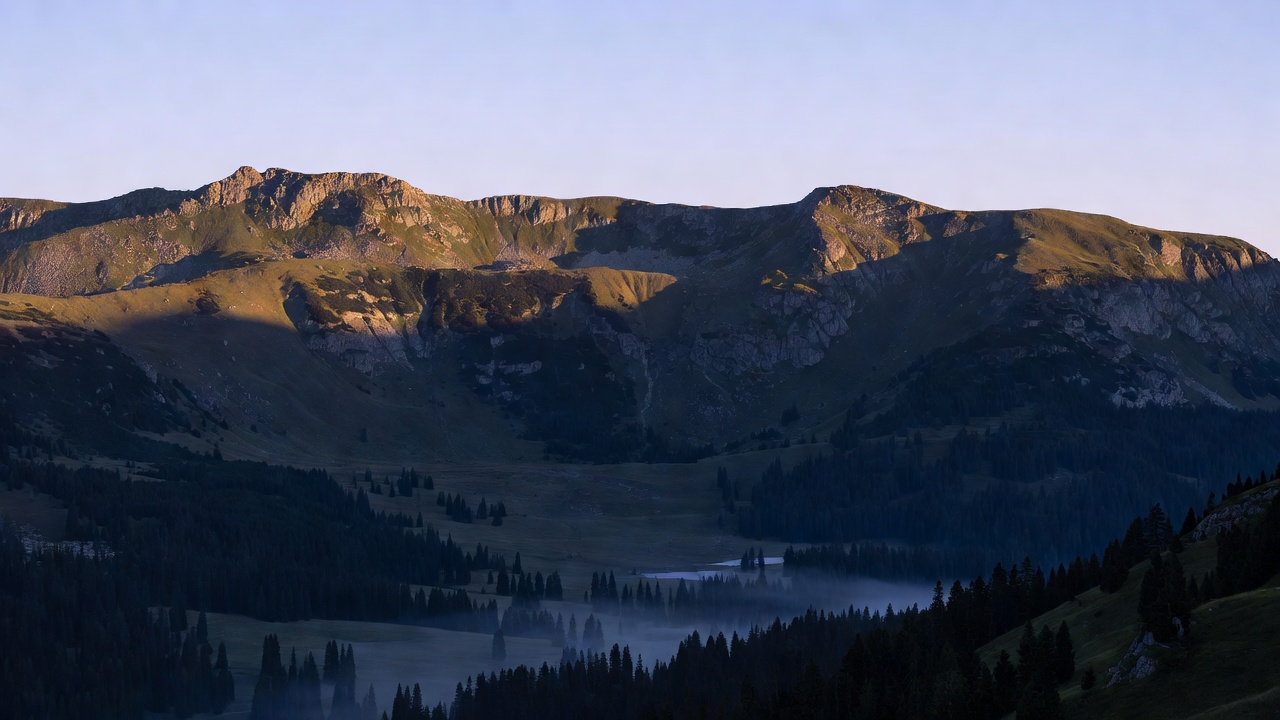
A published sunrise time describes a calculated horizon, not every ridge and hollow in front of you. A high eastern skyline can delay direct light reaching a valley, while a summit catches the sun much earlier. Start by checking the sun’s direction for your date and location, then compare it with the terrain. A planning tool is useful, but observation still decides what the scene offers.
Arrive with enough margin to walk safely, choose a position and prepare without rushing. That margin depends on the route and conditions, not on a universal number of minutes. If the approach requires travel in darkness beyond your experience, select a simpler viewpoint or scout it in daylight first. Carry a head torch and a backup plan; preserve enough attention for the return journey.
Choose direction before colour
Warm colour attracts attention, but the direction of illumination often matters more. Side light can reveal ribs and gullies by placing small shadows beside them. Front light may flatten those textures while making rock colour easier to read. Backlight can separate a ridge from a bright sky, reveal mist and create a strong silhouette, but it can also exceed the camera’s comfortable dynamic range.
Ask which version supports your intention. For a study of rock structure, wait for a narrow band of side light. For a graphic outline, let the mountain remain dark. If the main subject is repeated ridges, soft haze might be more valuable than clear air. There is no need to make every sunrise photograph include the sun itself, especially when it becomes a bright distraction.
Protect the important highlights
Use the histogram and highlight warnings as evidence, not as automatic instructions. Bright cloud texture usually deserves protection; a tiny sun reflection may be allowed to clip. In RAW capture, the camera’s preview and histogram generally reflect a processed rendering, so leave a sensible margin and check actual results on your own camera. A central histogram is not a goal in itself.
For a static composition, aperture priority with exposure compensation can respond quickly to changing light. Manual exposure is useful when you want consistency across frames or a panorama. If the scene exceeds a single exposure, make a short bracket while keeping aperture and focus unchanged. Use it only when needed; moving branches, water and cloud can create difficult blending boundaries.
Stay attentive after the obvious moment
At sunset, a bank of cloud near the western horizon can end direct light early. Equally, a narrow opening can briefly illuminate a peak under an otherwise overcast sky. Look around rather than watching only the brightest patch. The useful photograph may be behind you, where softer light and a quieter sky create a more coherent arrangement.
After the sun has gone, diffuse light can make colour transitions and reflections easier to manage. Exposures become longer, so check wind, tripod stability and moving foregrounds again. Do not extend a session beyond your safe return plan simply because the sky keeps changing. If you need to pack away, pack away. The mountain does not owe you a final frame.
Let imperfect weather have a purpose
Overcast conditions are well suited to intimate landscapes, wet stone and subtle mountain details. Mist can remove distracting backgrounds, though it can also erase the subject entirely. Rain showers may produce isolated light, but exposed terrain, electrical storms and rapidly deteriorating visibility are reasons to leave or avoid the area. Weather drama is not an invitation to accept unnecessary risk.
Review the session by asking when the scene became easiest to understand. Note the slope direction, cloud pattern and what blocked the light. These observations are more transferable than a single successful shutter speed. Over time, they help you arrive with an expectation while keeping enough flexibility to respond to the place in front of you.